
Flipped Classrooms
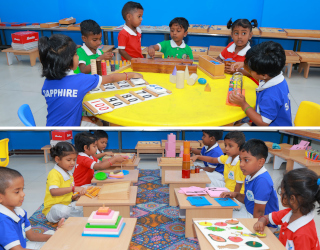
A flipped classroom is an instructional strategy and a type of blended learning, which aims to increase student engagement and learning by having pupils complete readings at home and work on live problem-solving during class time.
Role Play
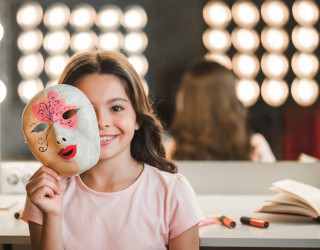
Role playing exercises encourage students to think more critically about complex and controversial subjects and to see situations from a different perspective. When properly employed, role plays can motivate students in a fun and engaging way.

The Jigsaw Method
It encourages cooperative learning among students. It helps improve listening, communication, and problem-solving skills.
Think - Pair - Share
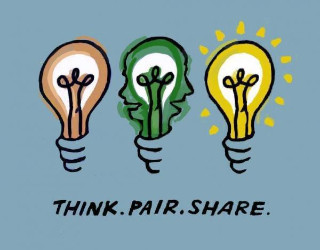
Think-Pair-Share (TPS) is a cooperative learning activity that can work in varied size classrooms and in any subject. Instructors pose a question, students first THINK to themselves prior to being instructed to discuss their response with a person sitting near them (PAIR).
Classroom Management Workshops
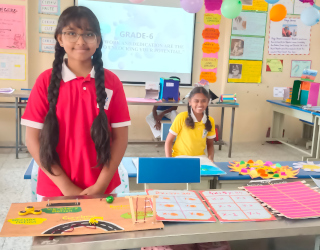
Classroom management training can help teachers prepare to teach to the best of their ability. It can also help students perform to their full potential.
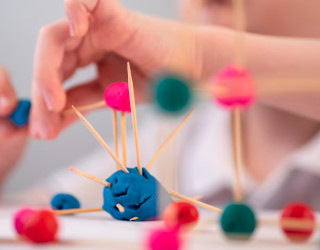
Hands on Activities
Hands-on learning serves as a catalyst for cognitive development by actively engaging students in the learning process. It has a significant impact on critical thinking skills and brain engagement, fostering deeper understanding and retention of knowledge.
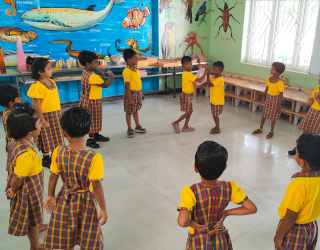
Crossover Learning
Crossover learning combines the strengths of both formal and informal learning environments, and aims to provide students with the best of both.
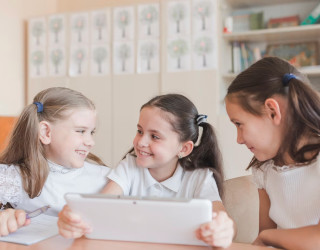
Co-operative & Conference Learning
Co-operative education enables us to enhance vision, honesty, team spirit, courage and skills for performing tasks. Therefore, if such leadership is developed from the members then it can lead to the progress of co-operative societies.
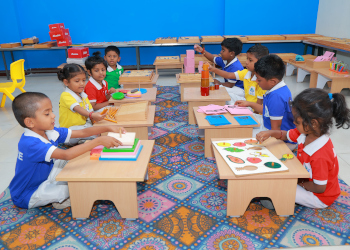
Gamification of Learning
One of the key benefits of gamification is that it makes learning informative and exciting, mainly thanks to its interactivity. Role-play and competitive elements add an immersive angle, which, if set up well, can quite simply make learning fun.
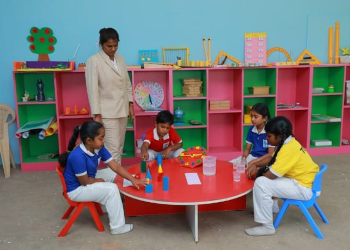
Enquiry Based Learning
Working in an inquiry-based learning classroom helps students develop a love of learning through independence. Rather than simply following along with a lesson, students create the lessons they learn based on their own inquiry, allowing them to become independent thinkers and problem-solvers.
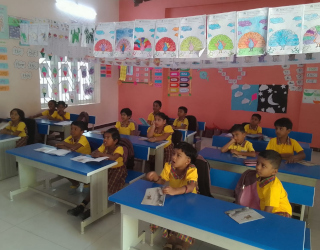
Climate Controlled Classrooms
We infer the significance of a classroom in a student's life. Our classrooms aids to create an inviting and nurturing learning environment.
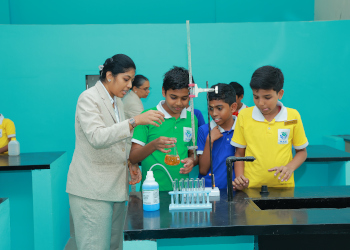
Experiential Learning
Students who participate in experiential learning feel empowered to use their knowledge and skills in contexts that will aid in their career development. Experiential learning also provides individuals with transferable skills such as creativity, innovation, team collaboration, problem-solving, and critical thinking.Students who participate in experiential learning feel empowered to use their knowledge and skills in contexts that will aid in their career development. Experiential learning also provides individuals with transferable skills such as creativity, innovation, team collaboration, problem-solving, and critical thinking.
FOUNDATIONAL
Pre-primary Till Grade 2
We focus on teaching through play-based or activity-based methods and on the development of language skills.
We nourish good behaviour, courtesy, ethics, personal and public hygiene, teamwork and cooperation, etc. in kids concentrating on academic excellence.
Flash cards, digitally enabled AC classrooms, Field visits.
PREPARATORY
Grades 3 to 5
Gradual transition from play-based learning to formal and interactive classroom learning. Children start experiencing various learning outcomes across subjects, including reading, writing, speaking, physical education, art, languages, science, and mathematics.
MIDDLE
The Middle Stage, which covers grades 6 to 8, will see a greater focus on subject learning and discussion of more abstract concepts in subjects like sciences, mathematics, arts, social sciences, and humanities.
SECONDARY
The High School (or Secondary) Stage, which covers grades 9 to 12, will comprise four years of multidisciplinary study, building on the subject-oriented style but with greater depth, greater critical thinking, greater attention to life aspirations, and greater flexibility and student choice.
The High School Stage may also allow exposure to more subjects and enable greater flexibility and more frequent assessments.